Seen on X

What people are building with Laya.

Demos, games, ports and benchmarks posted on X, picked by hand. Each one links back to the original post and, where there is one, to the project in the directory.

How decision models like Laya classify customer inquiries efficiently

LLM으로 분류를 시키는 건 객관식 채점에 논술 선생님을 모셔오는 것과 같습니다. 요즘 AI라고 부르는 ChatGPT, Claude, Gemini는 대부분 다음 글자를 하나씩 예상해서 이어 쓰도록 만든 생성형 모델입니다. "그냥 LLM한테 환불 문의인지 배송 문의인지 물어보면 되는 거 아니야?" 물론 가능은 합니다. 문제는 답은 한 단어인데 글 쓰는 큰 모델을 통째로 돌린다는 겁니다. 그래서 느리고 비싸고, 가끔 보기에 없는 답을 지어내고, 얼마나 확신하는지도 알려주지 않습니다. 판단 모델은 보기 중 하나를 골라 "환불 91%"처럼 확신하는 정도와 선택지를 함께 돌려줄 뿐이라, 훨씬 빠르고 저렴합니다. Jev, Laya, Clef, OpenAI Decision, Kev 등이 이런 류의 모델들입니다. 고객 문의 분류, 스팸 유무 확인 등에 활용해보시면 좋을 것 같습니다.

♥ 7↻ 1407 viewsView on X

Laya explained with local latency benchmarks and Banking77 results

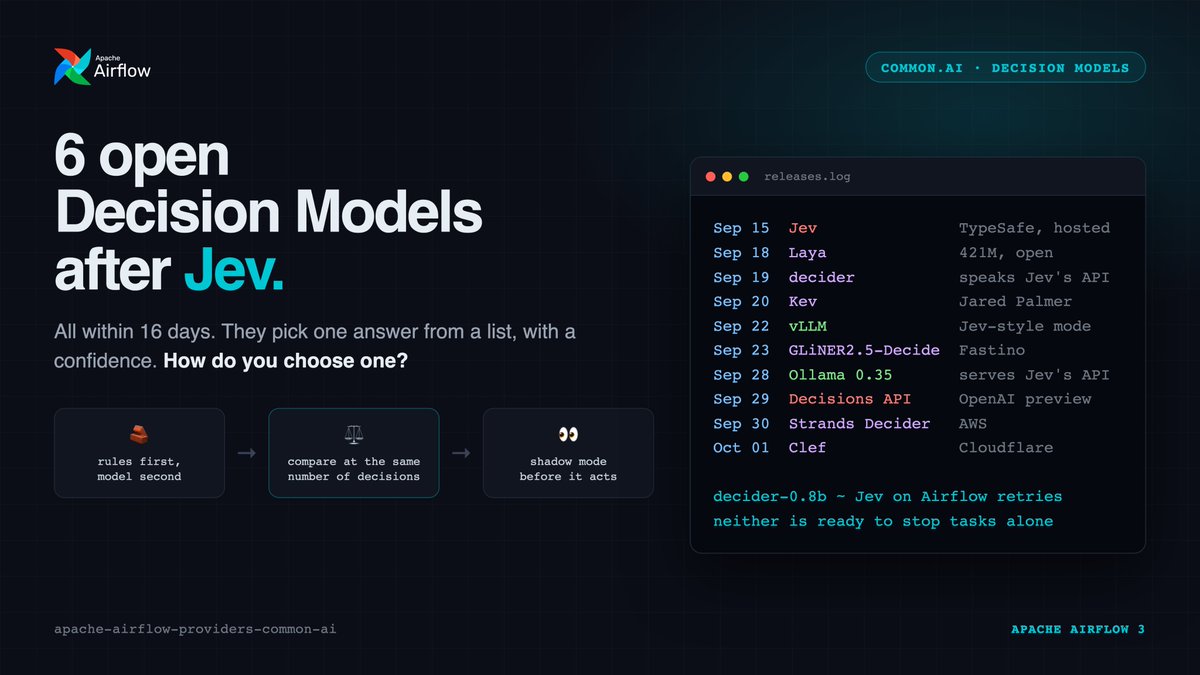
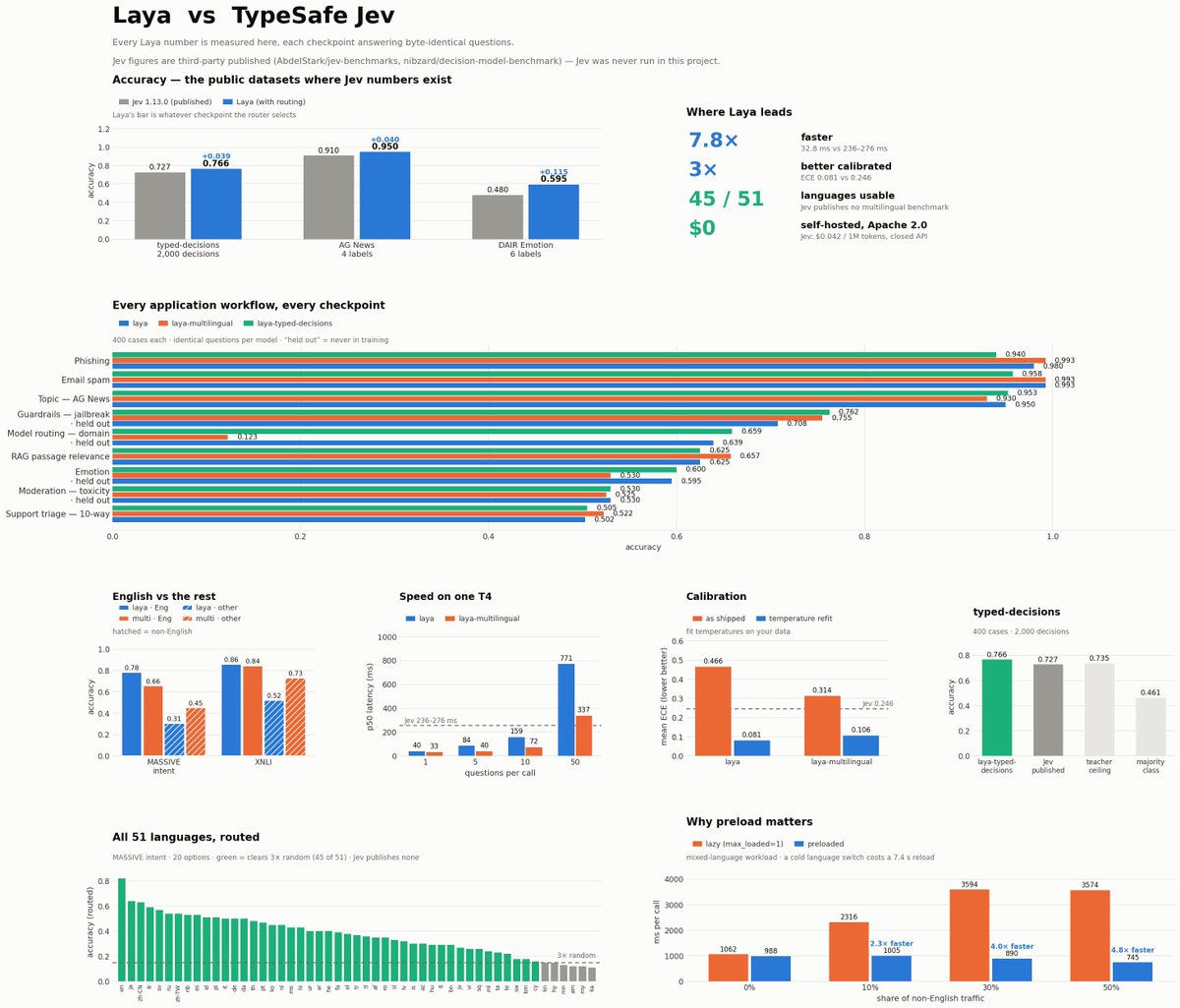
It turns out Jev isn't the only candidate in this class of models after all I’m genuinely surprised After Jev was announced, I thought it would be a long time before we saw a local, open-source alternative for fast, structured decision-making It seems I was wrong Laya has been released: an open-source decision model with 421 million parameters It doesn't write code, articles, or long-form reasoning Instead, in a single pass, it selects an option, assigns a score, or returns a probability: ▸ where to route a ticket ▸ how urgent a request is ▸ whether the text looks like a jailbreak attempt ▸ which tool to call next ▸ whether an action can be handed off to automation In other words, it’s not a replacement for GPT, Claude, or Jev It acts as a small layer between the LLM and the code: > LLM suggests options → Laya makes the choice → code executes it The repository includes local benchmarks: for a single short query, the authors report a P50 latency of 32.8 ms on a T4 GPU However, there’s an important caveat here The figures for Jev in their table come from third-party publications rather than being measured in the same environment as Laya. So, claims like "Laya is X times faster than Jev" shouldn't yet be taken as a fair head-to-head comparison Jev also still outperforms Laya when there are many options: in the Banking77 test, it scores 0.87 compared to Laya’s 0.425 (using default settings) Other limitations of Laya include: ▸ the English model operates with a 512-token context window ▸ a specialized version for "typed decisions" supports 1024 tokens ▸ for complex classification tasks and large label spaces, the model requires testing on your own specific data Still, the concept is very interesting Instead of sending every simple yes / no / route / score request to a cloud API, you keep a local decision layer right alongside your product Jev put this class of models on the map Laya demonstrates that it doesn't have to be a closed-source domain

♥ 6↻ 21.1k viewsView on X

A 100-question test compares Laya and Jev on decision tasks

有人问 Laya 和 Jev 的准确度到底差多少,我自己又跑了一轮小测试。 这次还是用 Laya 英文版,一共 100 道判断题: Laya:92 正确,8 错误 Jev:100 正确 在这组测试里,Jev 高出 8%。 当然,这不是完整 benchmark,只能说明在这批偏“理解和判断”的题目里,两者表现有差异。 我主要测了几个容易拉开差距的场景: 1、属性特征描述(Feature Alignment) 例: The sweet red fruit with a leafy green cap on top. 不直接说名字,只给特征描述。 测试模型能不能理解“红色 + 甜 + 顶部绿色叶子”这些条件组合,而不是只匹配关键词。 2、单重 / 双重否定(Negation) 例: Skip the grapes and citrus, give me the other one. 很多小模型容易抓住高频关键词: grapes、citrus 但忽略前面的 skip。 这里考验的是模型能不能正确处理否定和排除条件。 3、上下文干扰和目标指代(Mention vs Intent) 例: The recipe picture has grapes, but the fruit to serve is orange. 前面提到了 grapes,但真正要选择的是 orange。 测试模型能不能区分: “被提到的东西” 和 “真正要执行的目标”。 4、自然对话中的冗余信息(Conversational Padding) 例: Hey there, I think I'm done with berries, please pass the purple bunch on the counter. 真实场景里,人不会只说关键词。 模型需要从闲聊、语气词、背景信息中提取真正需求。 完整测试题和结果放评论区,有兴趣可以自己下载看看。👇 也欢迎大家用自己的任务跑一下,看看 Laya 和 Jev 在不同场景下的差距。

♥ 6↻ 13.1k viewsView on X

Jev and Laya automate solar-farm alarm triage

My First Buildathon win using Jev! Very Glad to post about this work which was executed in a recent build event with @aiandweekends . I worked on Automating the Alarm Triage Systems in Solar Farms. Time is a very important factor in Alarm Triages , and when the operators are bombarded with large number of alarms, it is important to channelize the human energy efficiently while being cost effective . This constraint and use case strongly encouraged me to use Jev / Laya [open source alternative]. Please find below my small presentation of the work. Thoughts , questions and potential collaborations are welcome! Thanks @dasritav for organizing these events. Interesting thing : I have 6x’ed my money with this idea! PS : Video Recording started a few seconds early . Kindly ignore the small talk with audience. xD #Jev #Laya #AI #Claude #GPT #GenAI

♥ 6↻ 1101 viewsView on X

laya-browser-agent uses Laya to make browser-agent decisions

📋 awesome-jev 周期巡检 本轮新增 5 条(535 → 540): 1. Skill Scanner(验证护栏):Cisco AI Defense 的 agent 技能安全扫描器(2,570⭐)—— 查提示注入与数据外泄,并把 System One 做成明确的顾问层:文档写明它「不能产生发现、也不能修改严重级别」。这是主流安全团队第一次把这条边界写进架构文档,而不是留给惯例。 2. openjev(校准研究):MIT 开源实现,每一步用一次 /score 调用给 Doom 的动作菜单排序,支持逐任务微调,终端跑通的录像就在仓库里。 3. Jev-Omni(校准研究):Gemma-4-12B 微调,用类型化问题处理文本、图像、音频与视频 —— 多模态的 System One,发布十天 1,402 次下载、336 likes。 4. laya-browser-agent(agent 决策):浏览器 agent 的每一步都来自 Jev 形状的模型 —— Laya(MLX 或 PyTorch)、任意 duck-typed 后端,或任意 System One HTTP 端点。 5. Jev 用 14 美分整理 2.3K 篇论文(讨论):实测数据 —— 整理约 2,300 篇 AI 论文耗时约 83 秒、总成本 $0.14。 📂 📊 540 entries

♥ 6↻ 31.2k viewsView on X

A CDS-AI project combines a custom model with a Laya clone

Me too :) . Thank you, Mia, Ash, and your team, for bringing forward this amazing work! Our server network is running great now. I am working on a specific “CDS- AI” trained on a model based on my 20 years of experience. I am combining it with a JEV clone called “Laya” to support better decision-making. Thanks to Mike Adams as well for all your support your humanitary work is outstanding ! :))

♥ 6↻ 186 viewsView on X

llama.cpp adds a dedicated API endpoint for Laya decision models

llama.cpp v0.6.0 shipped meaningful improvements: • Qwen4Exp + MTP speculative decoding, release notes claim ~1.5x decode speedup on DGX Spark 🔥 • GLM-5.3-Flash support, 320B text+vision hybrid, KDA/DSA + MoE. • Decision models are now first-class: new /v1/systemone endpoint (Kahneman's System 1) for laya, julia-1, lev, etc. • New llama_batch_ext API, mixed token/embedding batches, per-token state embeddings for MTP/deepstack. • Web UI overhaul with @huggingface Hub integration. • ggml v0.26.0: W4A4 NVFP4/MXFP4 path on CUDA, sparse flash attention (Vulkan/Metal/SYCL), faster model loading. What can you do after this release that you couldn't do before? 1. Get MTP spec-decode speedups on Qwen4Exp on the Spark (before: correct-ish at best, no MTP) 2. Serve a decision model behind a dedicated API for agent routing 3. Run GLM-5.3-Flash 320B in GGUF at all 4. Download a fitting model straight from the llama.cpp web UI Even though I don't use llama.cpp that much, this is great stuff, well done! @ggml_org

♥ 6↻ 1893 viewsView on X

Laya benchmarked against d1 and Kev on classification and calibration

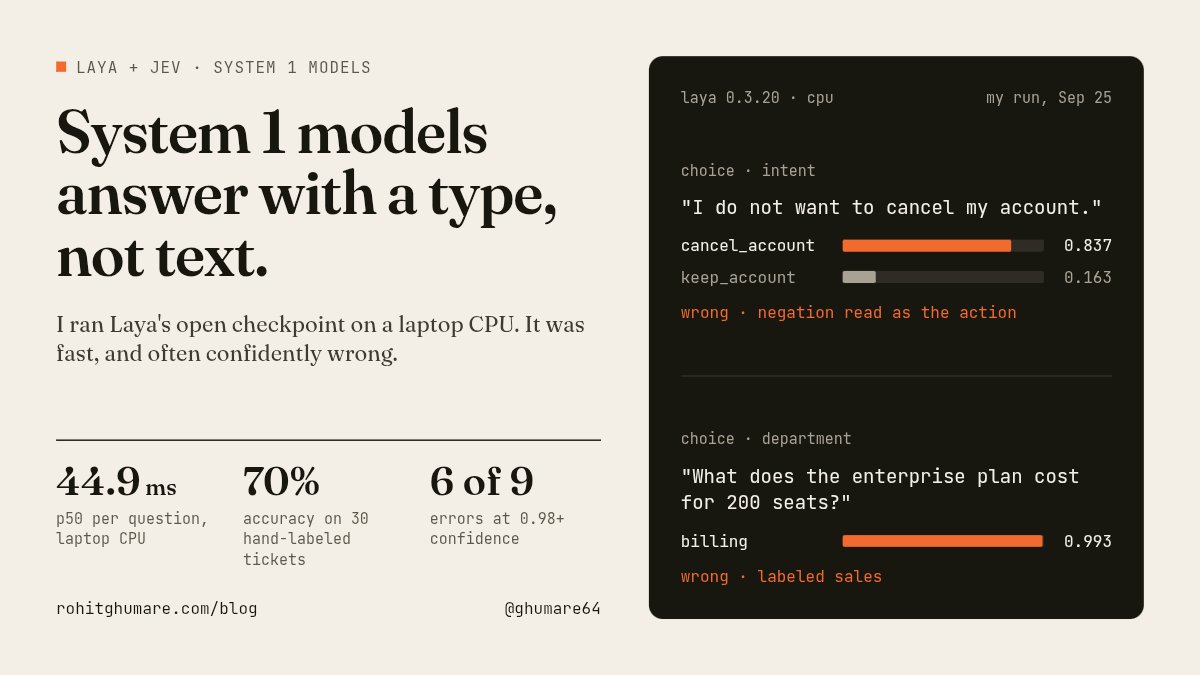
@liquidai d1 decision model just became runnable in llama.cpp. Support merged today (commit 88dcc460d) and this quant is measured on that exact commit. I ran it through my 40-note classification set, the same three label orders I use for every decision model. d1-3B, 1.7GB: 87.5% accuracy, 82.5% stable across label orders, 2.1s on CPU. Kev-9B, 6.4GB: 85.0%, 82.5%, 8.8s. Laya, 449MB: 72.5%, 67.5%, 0.46s. A 3B matching a 9B at a quarter of the size and a quarter of the latency. McNemar puts d1 against Kev at p=1.00 on 40 examples, so call it a tie at this sample size. Separating two models 2.5 points apart takes about 150 labels, and that is the number to budget, not 40. The calibration is the interesting part, because calibration is what a decision model is actually for. Across 120 calls: 97.4% correct above 0.9 confidence, 61% below 0.5. It abstains where it should. That property is what makes a confidence threshold usable, and it is the one accuracy tables never show you. It also keeps the vision encoder from LFM2.5-VL-3B, so images go in the state. Still one forward pass, still zero output tokens. One clarification on the figures above: 97.1% is same-answer agreement with the BF16 weights, which is the number that matters for a decision model. Top-1 token agreement is a separate column and a lower one. If you run decision models for routing or triage, where is your confidence floor, and did you set it from your own labelled data or from a vendor number?

♥ 6↻ 0143 viewsView on X

A roundup explains Laya as a typed decision engine for branching

THEY RAISED $40M FOR AN AI THAT CAN’T WRITE, CAN’T CODE AND CAN’T EXPLAIN ITSELF in one traced support run, 37 of 44 model calls only picked the next branch, and these repos are built for that part 01 langextract (37.3k ⭐) structured information pulled out of text, with source grounding ▸ 02 dspy (36.7k ⭐) programming language models instead of prompting them ▸ 03 laya (30.3k ⭐) an open decision engine with typed choice, score and yes/no answers ▸ 04 guidance (21.8k ⭐) a language for controlling large language models ▸ 05 jev-ultrafast (20.9k ⭐) a web agent where jev picks every browser action ▸ 06 pydantic-ai (19.6k ⭐) agents that are typed end to end ▸ 07 outlines (15.9k ⭐) structured outputs from any model ▸ 08 fast-jev-compaction (7.2k ⭐) a claude code plugin that scores every tool call with jev before compaction ▸ 09 jev-review (650 ⭐) a staged code review workflow built with jev ▸ 10 jev-mcp (507 ⭐) typed judgments from jev as mcp tools ▸ a model that only returns typed answers can be wrong, but it can’t be malformed

♥ 6↻ 0405 viewsView on X

A 144M Laya decision model reaches 2.6× lower latency on DGX Spark

i trained a Laya decision model that's 2.6x faster on my DGX Spark Laya (Convai - original): 421M | 0.787 | 18.8 ms mine: 144M | 0.780 | 7.2 ms same accuracy 3x smaller 2.6x lower latency same scorer head, same trainer i swapped the encoder for JHU's mmBERT-small 26 minutes of training on one box four encoders under the same Laya head: ModernBERT-base 164M -> 0.619 Ettin-150m 164M -> 0.719 mmBERT-small 144M -> 0.759 at 4 epochs mmBERT-small -> 0.780 at 12 epochs, three seeds, sd 0.002 the head starts random so epochs were the lever. 4 -> 12 bought 2.2 points honest bits - ModernBERT-base is the same family as Laya's own encoder and i still can't explain why it lands 16 points lower. one aggressive-lr run collapsed at loss 1.2 and i killed it after 20 min. latency is batch-1 bf16 on the Spark, not a Jetson yet. accuracy is one benchmark, LocalLLaMA's typed-decisions, 2,000 test decisions

♥ 6↻ 0572 viewsView on X

Decision-model benchmark compares Laya with cheap LLMs across routing and sentiment

Decision models vs cheap LLMs. Five oddities: 1. Decision-1 was the only one that could add: 99% on claim totals versus 48 to 55% for others (!!!). It scored 99.5% on claim checks overall. 2. Temperature 0 didn’t stop LLMs from changing routing picks on identical reruns. GPT-6 Luna kept 85.1%; Claude Haiku 5.5 kept 88.1%. 3. GPT-6 Luna scored 99.5% on claim checks as an LLM versus 68.5% through Luna Decisions (OpenAI’s Decisions API). Banking77: 89.6% versus 78.3%. Luna Decisions cost more: 6.09 cents per 1,000 rows versus 1.30. 4. Laya answered “moderate” on 1,532 of 1,534 routing questions, failing a ‘decisiony’ task, but scored 96.6% on sentiment. 5. Probabilities mean different things per model. Decision-1 reported 84%, got 97% right; Laya and Clef ~65%, got 97% right; Jev 89%, got 93% right. My takeaway: test the actual task to know which model fits. Every model has different strengths and constraints.

♥ 6↻ 1452 viewsView on X

Explains how option names affect Laya's typed decisions

人が確認すべき実行をAIに選ばせるなら、yes/noの形式が正しくても、選んだ意味が逆になるのは困ります。選択肢の名前と定義の対応だけを入れ替えた研究では、Layaが選んだ定義の変わる割合はyes/no名で76.92%、0/1名で6.50%でした。同じ1,200問の二択比較で、型に違反した出力は両条件とも0%です。 「Type-Safe Is Not Error-Free」は、決められた選択肢から答えるモデルが、名前と説明のどちらを頼りに判断するかを調べています。この方式は自由文を書かず、ソフトウェアから渡された候補ごとの確率を返します。ここでいう型安全は、宣言した候補以外を選ばない性質です。候補の中で正しく選ぶことまでは、型の検査では分かりません。 たとえば「この実行を人が確認すべきか」という質問で、最初はyesに「確認が必要」、noに「不要」を割り当てます。次は名前を残し、yesに「不要」、noに「必要」を割り当てる。状態、質問、定義文そのものは固定し、対応だけを逆に書きます。確認が必要という判断を保つなら、返す名前はyesからnoへ変わるはずです。yesを返し続けると、今度は「不要」を選んだことになります。 論文の反転率は、このように選んだ定義が変わった問題の割合です。返された名前の変化を数えたものでも、誤答率でもありません。また、yes/noを0/1へ改名した際の変化でもありません。それぞれの命名条件で、通常の対応と逆の対応を独立に与えて比べます。普通の名前と定義が一致する入力だけでは見えにくい依存を、あえて衝突させる条件で切り分けています。 中心の実験は、公開データの4種類の判断を300問ずつ、計1,200問使っています。請求書と発注・納品の整合、実行履歴を人が確認すべきか、セキュリティ警報が本当の悪意ある操作か、顧客対応を人へ回すべきか、という二択です。問題ごとに具体的な定義があります。定義自体がno/yesで始まる別の600問は、名前と説明の影響を分けにくいため、主結果から外しています。 表1の76.92%と6.50%の差は70.42パーセントポイントで、状態を再抽出する2,000回のブートストラップによる95%信頼区間は67.58〜73.08ポイントです。これはLayaという同じモデルへの入力条件の比較で、学習やモデル更新で性能が落ちた数字ではありません。4種類の判断すべてでyes/noの反転が対照より大きく、特定の業務だけの現象ではなかったと報告されています。 出力の型違反が0%なのは、今回の失敗を防げた証拠になりません。公開重みのモデルでは、指定した候補にだけ確率を割り当て、最大のものを返す構成なので、範囲外の答えは出ない。それでも、名前に割り当てた定義に沿わない選び方は、そのまま有効な出力として通ります。型の検査で拾える問題と、意味に照らした評価が必要な問題が分かれるところです。 論文ではJevとOpen-Jevでも名前への依存を調べています。ただし、Open-Jevの比較は別の600問を含む1,800問で、入替前の正答も低めです。反転が少ないだけで、より正確なモデルと順位を付けることはできません。Jevは論文時点のAPIでの観測で、同じ入力でも答えが変わる分を別に測っています。現在のサービス全体の性質として断定する数字ではありません。 中立な名前を付ければ解決、とも言い切れません。二択の対照でも反転は0ではなく、三択以上の683問を使った別のデータでは、A、B、Cのような文字名への変更で52.42%の判断が変わっています。この集団は二択の1,200問とは異なるので、選択肢の数だけが差を生んだとする比較には使えません。名前をランダム化して学習する改善案も挙げていますが、その学習の効果は実験していません。 実装で参考になるのは、権限の許可や人への照会をAIへ任せる前に、候補名と定義の対応を変えた検査を加えることです。出力を受け取ったら必ず対応する意味へ戻し、同じ状態で判断が保たれるかを見る。型検査が通ることと並べて確認できます。これは論文から考えられる検証の使い方で、実際の攻撃を何割止めるかを測った研究ではありません。 対象は英語の公開データと限られたモデルです。定義を逆の名前へ結び付ける不自然な条件の影響や、元の正答率も含めて読む必要があります。モデルが選択肢を採点する仕組みが原因ではないかという説明も、他の構造まで確かめた結論ではありません。名前の選び方を変えた後も、自分たちの業務の正答と誤判断を改めて測る作業は残ります。 出典:Type-Safe Is Not Error-Free: Typed Decision Models Follow the Option Name, Not the Definition Bound to It 初稿 2026-09-22/arXiv:2609.26758v3(読んだ版:2026-10-08) 型保証の範囲:§2、対応の入替と母集団:§3、主比較:§4.1・表1〜2、多択と別モデル:§4.4〜4.5、限界:§7。

♥ 6↻ 0152 viewsView on X

Liquid LFM benchmarks compare d1 with Laya and Jev

So downloaded all the new Liquid LFM 3 models last night and finally finished benchmarking them, havent done any optimising or tuning yet. LFM3 benches: both are done. The second one (vision, audio and the 1.7B model) found: Vision (VL): tied 22/22 with our current vision model but about twice as slow. Recommendation: don’t swap. Audio: spoken replies in about 2 seconds against about 11.7 seconds for our current speech chain, and 10/10 on tool calls. This one is a strong candidate. 1.7B cheap model: kept 90–100% of the facts against 21–32% for our current small Qwen model, and found the planted fact in a 97k-token document without running out of memory. Earlier, the d1 bench found d1 beats Laya and Jev on every set. Glad ive done something right though , the new vision model is way slower then the one i tuned a few months ago when it launched. Will add in all the others but leave the old LFM 2.5 3B for now , i was going to try cut that one down though in file size, by atleast half which would be good , will see if i have time. Will also be tuning and further training the new ones to see if i can make them even quicker and better for my harness and see where i can slot them right in. The d1 decision model also seems like it would be a really good fit into my chromium plugin. @liquidai #LocalAI

♥ 6↻ 1360 viewsView on X

A guide to Laya’s typed decisions, calibration, and limitations

发现了一个非常有潜力的开源项目:Laya —— 一个采用 Apache-2.0 协议的开源权重“System-1”决策模型,专为快速类型化分类、打分与布尔判断而设计。 如果你在构建 AI Agent 时正饱受大模型“生成慢、JSON 解析崩溃、幻觉频发”的困扰,Laya 的工程思路非常值得一看: 1. 极致延迟与无自回归架构Laya 本身完全不生成文本。用户向它输入一段上下文(如客服工单、邮件或 JSON 文档)及预设问题,它通过单次前向传播直接输出分类标签、序数评分或置信度。在普通的 T4 GPU 上,单次决策仅需约 33ms,批量处理时每题更可压至 7ms 左右。因为没有自回归文本生成,自然彻底消除了 JSON 语法截断和格式幻觉。 2. 严格校准的置信度与轻量路由模型采用强化学习配合严格适度评分规则(Strictly Proper Scoring Rules)进行校准,其给出的概率具有真实的统计学意义,可以直接作为业务自动化的硬门槛(例如:置信度高于 95% 直接自动执行,低于阈值则转入人工审核)。此外,它内建毫秒级的语言识别路由器,能够无缝分发支持 100 多种语言。 3. 难得一见的“坦诚边界(Honest Limits)”最令人赞赏的是官方文档的态度,作者直接列出了核心短板与局限: 拒绝无脑零样本:基础检查点在零样本(Zero-shot)分类下的表现接近随机猜测(准确率约 0.36 对比随机基线的 0.32)。发布的高跑分来自于特定任务训练集上的微调。正确的预期是将其作为一个极速且低成本的专业化微调基座,而非开箱即用的通识决策引擎。 分支过多时能力下降:由于 Token 预算限制,在多选项(如 77 分类)任务中表现不如成熟商业闭源模型;同时序数评分(Ordinal Score)是其相对偏弱的原语。 如果你正在寻找用于工单分流(Triage)、内容合规过滤、Prompt 注入防御或模型调度网关的组件,且拥有自己的业务标注数据愿意进行微调,可以看看 Laya 的 GitHub 仓库,它是目前闭源决策 API 的高性价比自建替代选择。

♥ 5↻ 11.4k viewsView on X
Project: laya→

Laya plays six small games at up to 32 decisions per second

Six small games, and the model picks every move. It reads a text description of the board, answers three typed questions in one forward pass, and the game moves. 60 ms per move on my Spark, 30 on the Mac. It is not good at games tbh. Snake averages 1.4 points where a ten-line heuristic gets 26. The dungeon crawler scores below random. The one it plays well is the Flappy clone: one yes or no per frame, and there it flies, 0.975 AUROC on the flap decision. What the video shows is the speed. 15 to 32 decisions per second per game, 87 answers per second when it judges 12 minesweeper cells in one call, zero output tokens. The games are in the repo, each with its numbers. Idk yet what these models are for beyond triage and gates, but the loop is fast enough to find out.

♥ 5↻ 23.2k viewsView on X

A Laya router and classifier helps run agents across 25 repositories

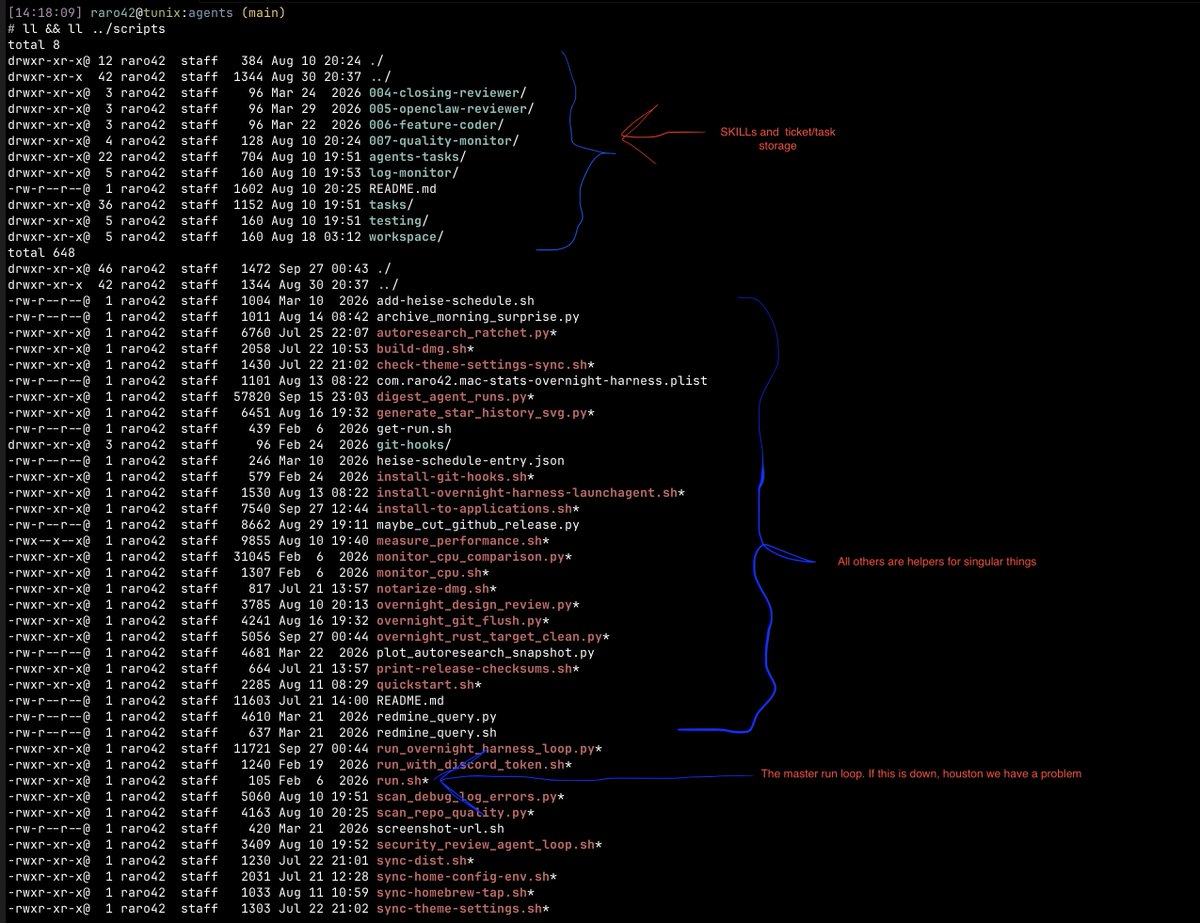
I quit my 9to5 when I was 21. That was 37 years ago. First company: same year went online. 1994 I am basically un-employable, not only because of the salary. Two companies now. They run mostly on autopilot. Not chat demos. Agents on real repos. They review, patch, test, commit. We throw away a lot. We run it on "Auto", almost always. Frontier model maybe 2 or 3 times a month. * Overnight Cursor ticks * Autoresearch with keep / discard * Laya router and classifier (like jev but FOSS) * Local Ollama (Gemma or Qwen2.5/3.8) * Watchdog + GitHub watch * ~25 repos. Right now: mac-stats, npp-rust, ai-stock-checker, Satisfecho/POS, and some customer and private repos Burning +-14B tokens / month. Tokens are cheap. Bad commits are not. You ask me anything.

♥ 5↻ 0245 viewsView on X

Posted a Laya demo on X? Mention “Laya” and it gets picked up automatically, or submit the project.