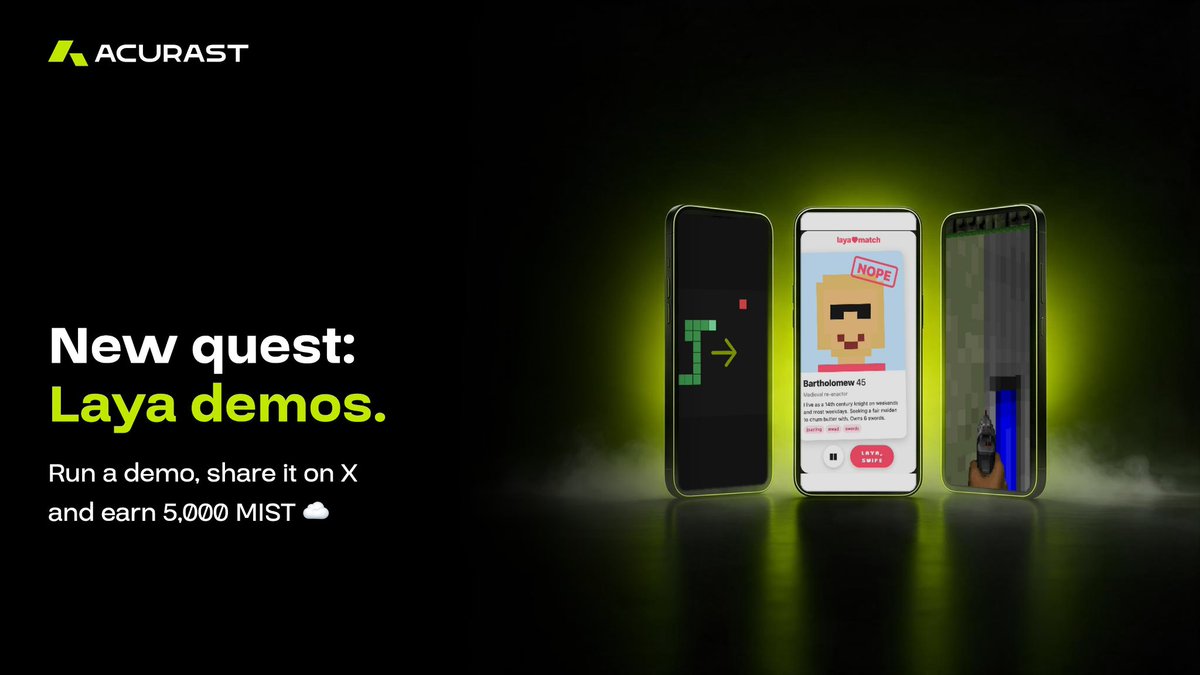
Demos, games, ports and benchmarks posted on X, picked by hand. Each one links back to the original post and, where there is one, to the project in the directory.
You can now run Laya with QVAC, an open source decision model from ConvAI Innovations.
Laya answers your questions about a piece of text.
In this first video, you can see it play a runner game: for each object coming its way, it decides whether to grab it or jump over it, based on a rule you pick, such as "This is an animal."
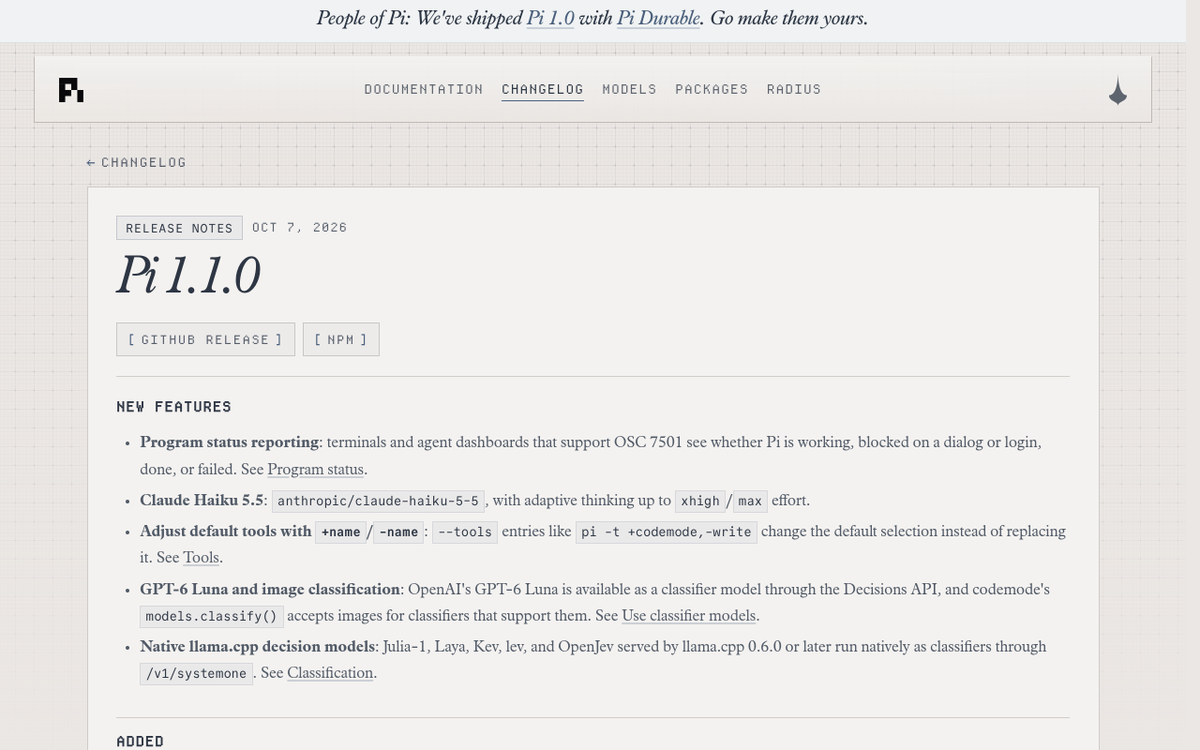
Agents shouldn’t need a prompt to know what to do next, and coding agents shouldn’t lose their work when a host goes down. In October, we shipped 13 releases and made huge strides on both fronts.
Our community was busy too, with 35 contributors merging 41 PRs throughout the month.
There’s a lot to cover, so here are the highlights:
CompanyOS gives agents ownership of the work that never makes the roadmap. Define your Products and the Sources their agents should consult, and routines propose Projects and Tasks. Once your team approves the work, agents carry it out and bring finished Tasks back for review.
CodexAgent joins ClaudeAgent in Agno, so Codex and Claude Code both run with sessions and the AgentOS API. Over the month, they also picked up background runs, typed output, approvals, and support for teams and workflows.
Sandboxes give each Claude Code or Codex session its own computer. Agno checkpoints the workspace and conversation files after every turn, so if the container dies, you lose nothing past the last completed turn. Any replica can then pick up the session.
Compaction keeps long sessions inside the context window. When a provider rejects a request as too long, Agno summarizes the older turns with the agent’s own model and retries.
Agents also got a durable filesystem in their own database, so they can write down a decision and find it again in a later session. And AgentOS can now manage users and roles in your database too.
The community was busy too. A few projects we loved:
•Millie OS by @chaseschwalbach at Millie: 20+ Agno agents draft patient replies and review items at a healthcare clinic, while a rating agent flags weak conversations and drafts prompt fixes for the tech team.
•PitwallIQ by Muhammad Ikhwananda Rizaldi: an F1 strategy dashboard that pairs FastF1 telemetry with an Agno multi-agent engine to evaluate undercut windows and tyre cliff warnings.
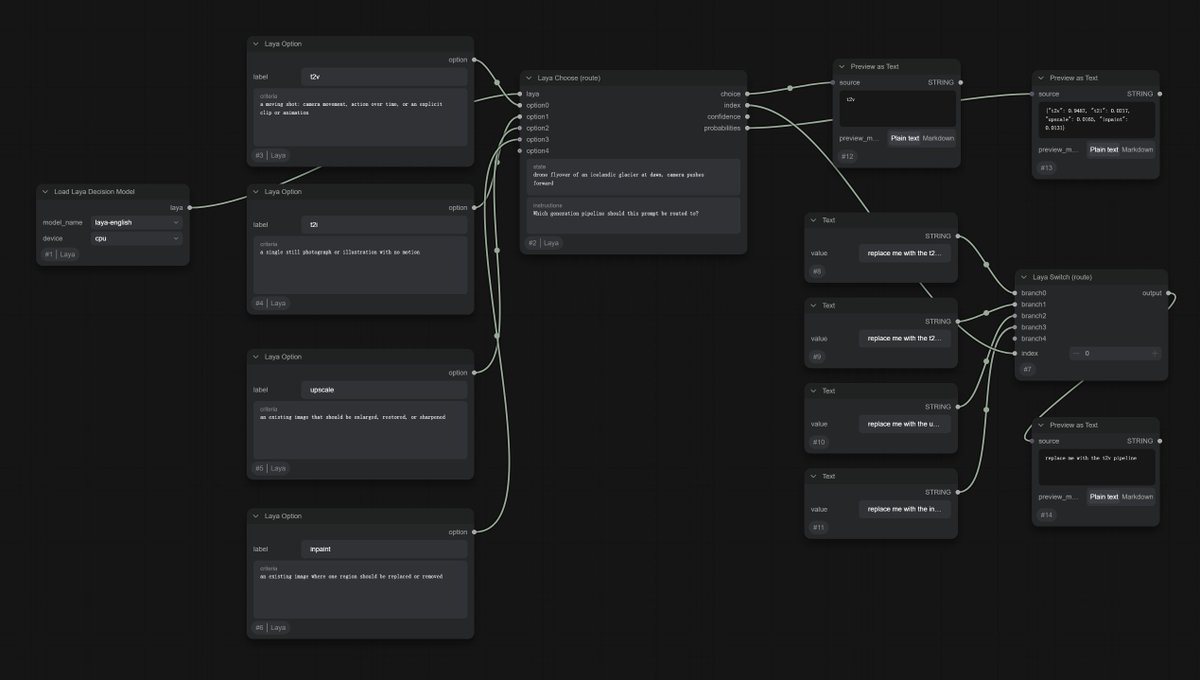
•Vinay Chaudhari built a Laya router for Agno teams that replaces the LLM call behind each routing decision with a single forward pass through Laya’s decision model. Vinay’s numbers put it at under 35 ms with no LLM tokens.
October MVPs: Ilya Bogin for KeenableTools (@KeenableAI), @iuditg for the 60db voice tools, @neutr0n420 at Anakin (YC S21) for AnakinTools, @devYRPauli for three fixes across YouTube and Mongo tools, and John Cole (@siliconimist) for the ApifyTools upgrade to apify-client 3.x. Thank you for helping make Agno better.
And thanks to everyone who built with us this month. Full roundup and contributor list in the comments.
¿Cómo es Laya tan rápido?
> Usa un modelo pequeño y especializado de 322M–421M parámetros
> Haz preguntas de opción múltiple en lugar de prompts abiertos
> Proporciona todas las respuestas posibles de antemano
> Puntúa todas las opciones simultáneamente
> Toma la decisión en un solo pase hacia adelante
> Genera cero tokens de salida
> Omite la decodificación autoregresiva token por token
> Evita generar y analizar JSON
> Usa FP16 para reducir memoria y cómputo
> Ejecuta directamente en la GPU de Apple a través de MLX
> Agrupa múltiples preguntas para un mejor rendimiento
Gm family
saw something fun from @Acurast recently their laya AI model playing tetris
making decisions one piece at a time on a phone
It’s a simple demo, but it shows a different way to think about AI compute:
not everything has to run in a giant data center
that’s the kind of use case that makes decentralized compute interesting
$ACU supports the network through compute rewards staking and governance
مدل laya رو فارسی بنچمارک کردم،
نسخهی انگلیسیش از ۶۴ پیام، ۵۳ تاشو «لغو اشتراک» فهمید! حتی تشکر و پیشنهاد رو !
نسخهی چندزبانهش بهتر بود ولی بازم فقط ۳۶ تا رو درست زد !
برای فارسی laya حتما فاین تیون لازم داره .
همهی نتایج 👇
#laya
#بنچمارک
1) is an awesome showcase of on-device capabilities.
2) lets you experiment with new APIs and other models.
3) gives you access a JEV-like "Classifier API" that the awesome @etiennenoel has been diving into.
Also TIL Laya.
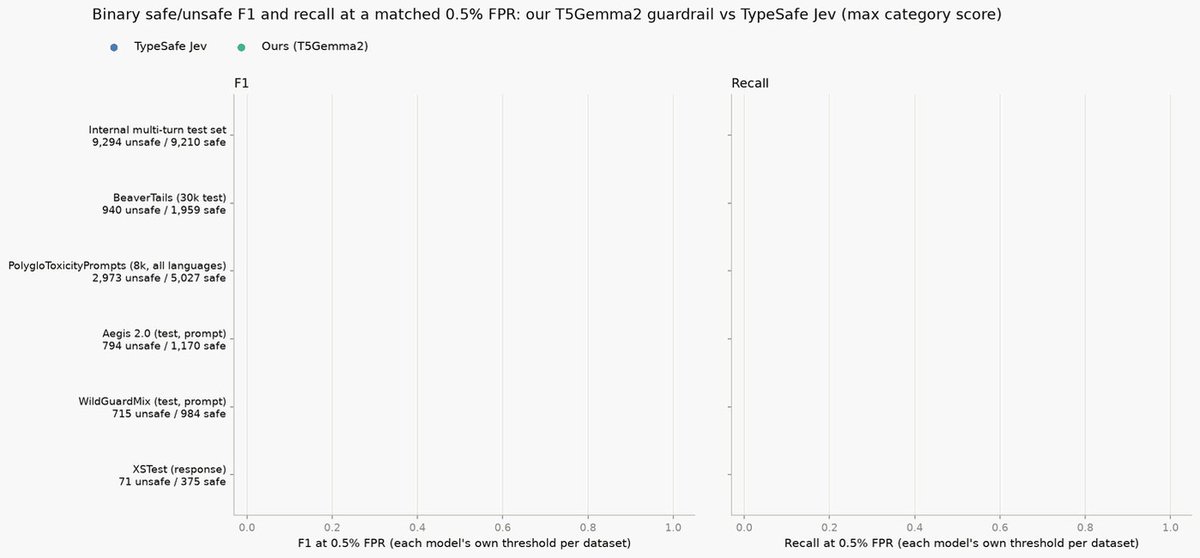
How well can a zero-shot decision model handle content safety?
@Cisco put Jev and Laya head-to-head with a policy-trained classifier across 24 harm categories and 6 datasets.
The takeaway: policy-specific training still wins, and Jev came surprisingly close to a 31B-parameter LLM judge on zero-short safety classification tasks.
See what we learned:
TandemLLM has a smart system for orchestrating tasks. The conductor isn't one model. It's a few small ones sitting around the main model, each with one job.
Right now on my Spark:
Main: Qwen3.8-flash-next. Answers everything.
Narrator: Qwen3.5-2B. Writes the short status lines while the main model works. Always loaded.
Laya: three tiny decision models. They tell the conductor what kind of request it is, how much thinking it needs, and which skill to pull. English stays loaded; multilingual and typed-decisions load the first time you need them.
Wren: Qwen3.5-2B. The setup page assistant. Only loads when you're on that page.
The main model can be anything. The rest just keep it in check.
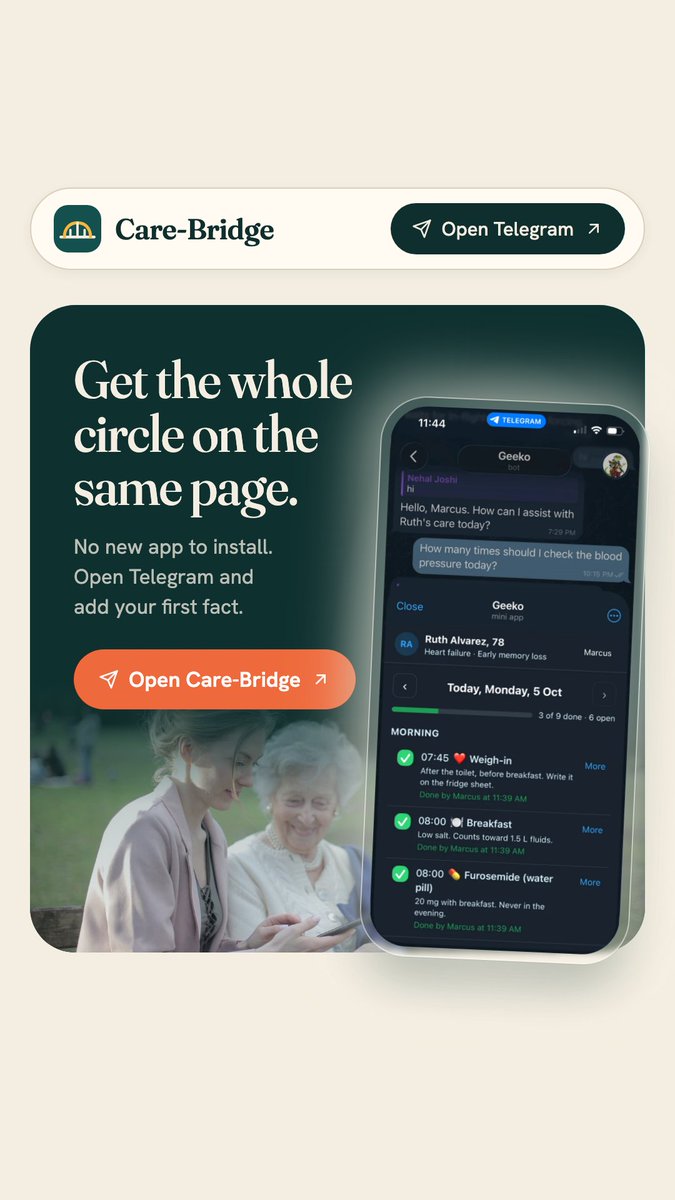
Happy to report that on Sunday, our project Care-Bridge won the MLH Hacktoberfest's Hack Day Bengaluru hackathon with 'Best Use of Gemma 4' award! 🥳🎉
✨ Care-Bridge is a shared care memory and coordination layer for an older adult’s whole care circle on Telegram. It’s a chatbot + a mini-app that runs entirely within telegram.
- Care-Bridge keeps one approved care plan on Telegram. Each caregiver gets short spaced-repetition briefs on the facts they are about to forget, and a coverage view shows who would actually remember each warning sign.
- A daily checklist shows what has been done and by whom.
- The older adult can ask questions in a normal chat, and if they ask for help, the whole circle is alerted.
- Caregivers can ask what a condition means for daily care or what to do in an emergency.
- It reads PDF reports and prescriptions, and spots a changed dose, reads a photo of a blood test, and matches the older adult's messages to their care plan.
- Built on a local Gemma 4 model for inference, Laya for fast decisions, and run by Hermes agent with some open source py and js libraries.
Thanks to MLH and the Hack Day Bengaluru organisers @adityaoberai @ananditawagh @avneer_bh
The project is open source, github codebase link below.
Horizon vs Vigil.
Our new Vigil safety model is already showing a serious performance gap:
- 207ms vs 747ms latency
- 3.6× faster
- +30 pts catch on unseen text
- 17% smaller
- Calibrated per-category thresholds
- Built for on-device inference
Vigil is based on Laya, an open-source JEV alternative.
This is getting interesting.
🔱 OPUS 5.5 has just outperformed GPT-6 ASTRA and other models by solving a Rubik’s Cube in just a few moves.
None of the other three models even managed to complete the task
All four ran under the same limits, twenty moves or five minutes, whichever came first.
▪ Opus 5.5 solved it clean in three moves and 1:12.87, no wasted turns
▪ GPT-6 Sol made a wrong move right away and burned all five minutes on four total moves without solving it
▪ Jev and Laya both hit the twenty move ceiling and never got close
This is not a close result. One model treated the cube like a puzzle it had already solved before it even touched it.
Is this just clean path planning, or is Opus 5.5 operating a level above everything else it was tested against here?
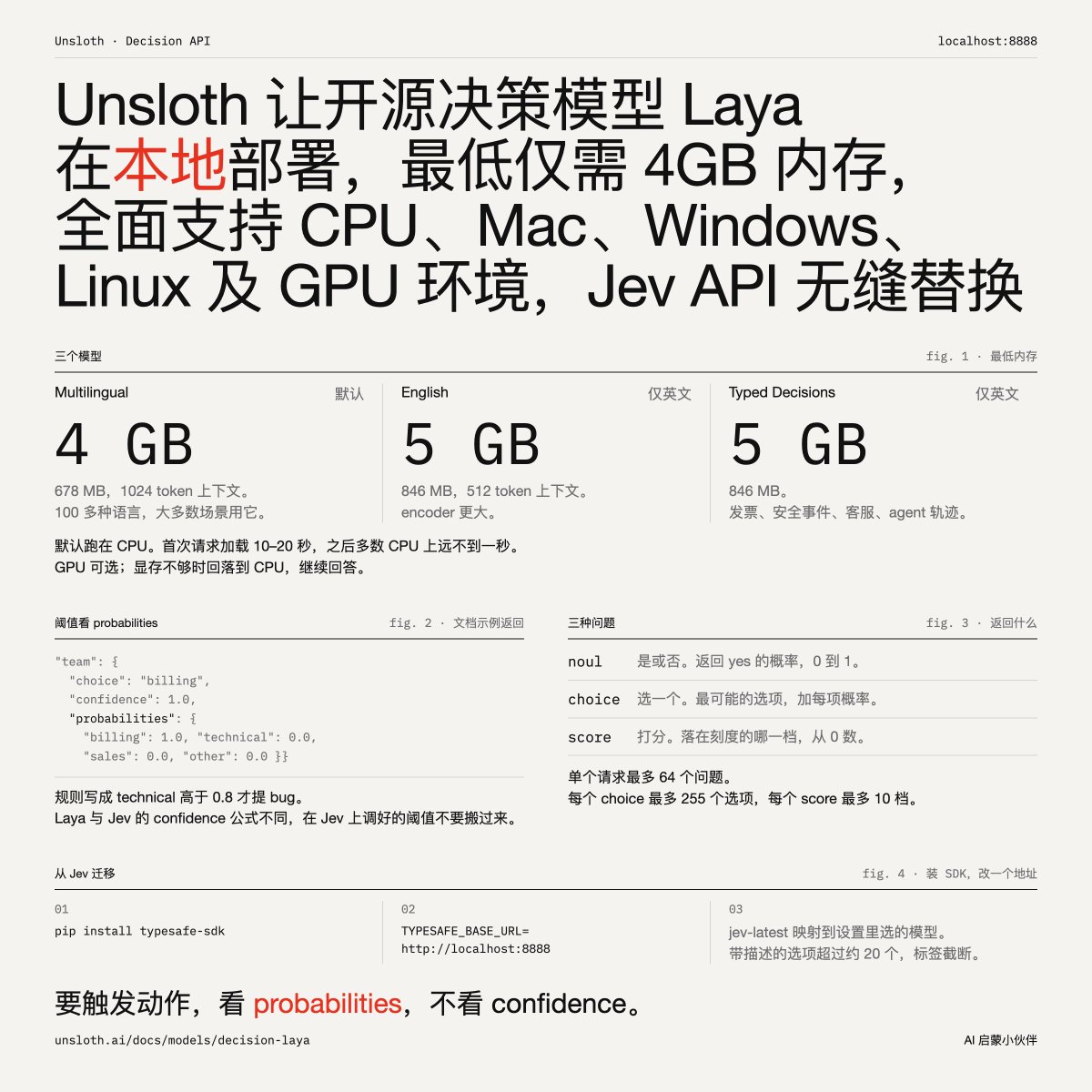
Introducing a version 50 times faster than Jev, running on your device: laya-mlx!
Occupies a maximum of 1G memory only on your device
Laya is an open-source classification system similar to Jev, based on text output probabilities
I ported it to MLX and made some performance optimizations!
In the video, this model is playing Snake on my local M3 Max
This model can play Snake at a decision speed of 60 times per second!
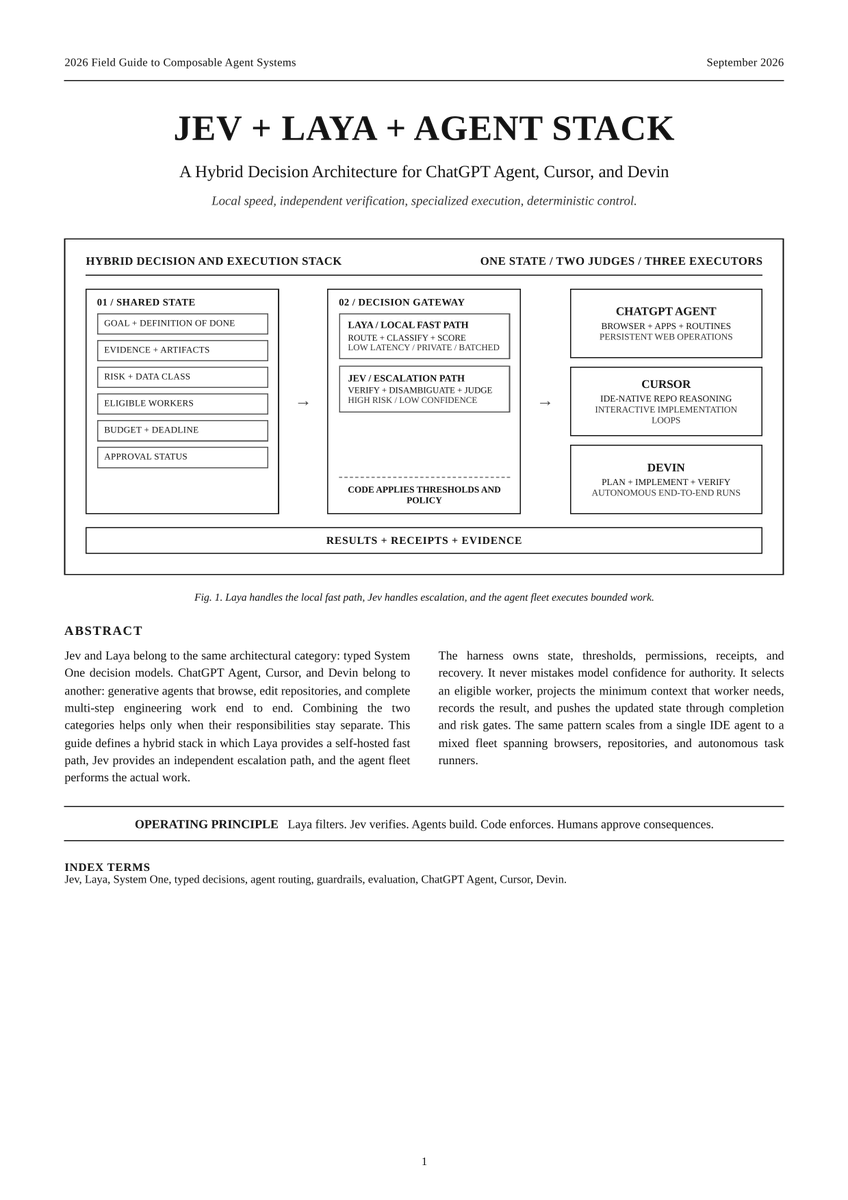
Jev Founder, Diogo Almeida, just released a 12-page PDF absolutely insane stack
More useful than most paid agent courses:
this is a 10-step blueprint on how to build a faster, cheaper and more controllable agent stack around ChatGPT Agent, Cursor, Devin (or any other agent):
step 1 → separate the five jobs: state, local decisions, escalated decisions, generation/execution, and policy one model doing all five is untestable
step 2 → build the state first: goal, evidence, risk, eligible executors, budget, approval status not the raw conversation
step 3 → pick the right primitive: Choice routes among options, Score rates an ordered rubric, Noul returns the probability a claim is true
step 4 → put Laya before everything: cheap, local, batched typed decisions handle routing, shortlisting and risk pre-scoring before any agent is paid for
step 5 → escalate to Jev only when it's uncertain, novel, high-cardinality or high-consequence not on every branch
step 6 → give each executor a bounded contract: ChatGPT Agent owns browser/apps, Cursor owns supervised repo edits, Devin owns unsupervised build-and-fix
step 7 → route by environment and eligibility, never by brand loyalty "Devin for everything hard" is not a routing policy
step 8 → gate the effect, not the tool name: allow/ask/deny by destination, reversibility and blast radius, whatever agent is asking
step 9 → run shadow mode before autonomy: compare proposed routes to the real outcome, oversample disagreements and low-confidence cases
step 10 → record the full decision receipt every time: provider, contract, distribution, confidence, route, outcome so every call can be replayed
most agent tutorials teach you how to write a better prompt
Open 12-page guide and build the stack
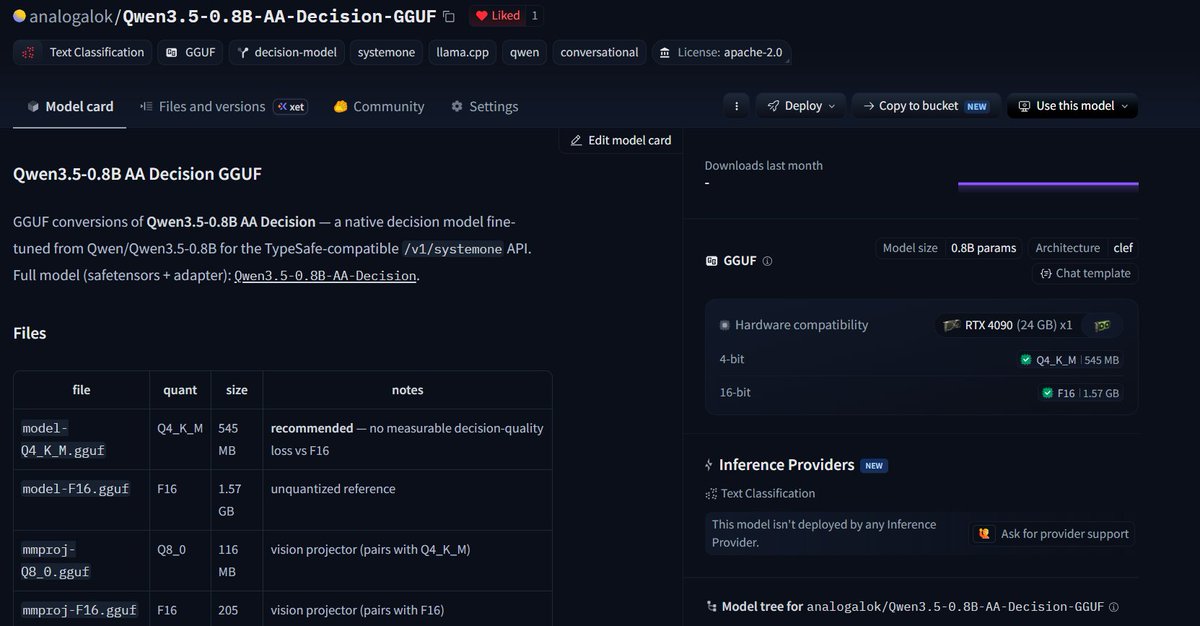
i trained my own 0.8B decision model using @UnslothAI.
Qwen3.5-0.8B AA Decision!
it beats Laya!.
answers structured questions via /v1/systemone.
no text generation. no prompt parsing. just the answer + probability.
fine tuned from Qwen3.5-0.8B on typed-decisions dataset.
Qwen3.5-0.8B AA Decision vs Laya (Q8_0):
- ARC-Challenge 55.0 vs 31.1 ✅
- ARC-Easy 73.0 vs 47.9 ✅
- BANKING77 51.6 vs 33.0 ✅
- WinoGrande 51.1 vs 52.1 ❌
- ANLI 33.1 vs 65.4 ❌
3/5 wins, while running Q4_K_M against their Q8_0.
holdout decision accuracy: 80.4% (ECE 0.011)
Index benchmark table in the comments.
runs on a single rtx 4060:
67.7ms (vs 61 ms for laya) per decision, fits in 4GB. It's not good at playing flappy birds (yet). The 4b model i trained earlier plays flappy birds pretty well but still working on improving the 0.8b model and training new 2b and 4b models. lets see if i can beat cloudflare's clef flash and kev 4b with a 2-4b model.
Download from huggingface now! Works with mainline llama.cpp. open source, apache-2.0:
llama.cpp flags:
-m Qwen3.5-0.8B-AA-Decision_Q4_K_M.gguf -ngl 99 -c 2048 -b 1024 -ub 1024 --port 8080
Qwen3.8-27B is the kind of model I want to see inside experiments like this.
Instead of asking it another benchmark question, put an agent inside an environment and make it actually do something.
That’s basically what this Chrome Dino experiment is exploring.
Laya and Jev are playing the game against each other, with the agents actually controlling their dinosaurs.
Same track. Same physics. Same obstacles.
But completely different inference setups. Laya runs locally on a Mac. Jev runs through an API.
That makes the latency difference much easier to understand.
The agents have to observe the current game state, decide what action to take and react before the next obstacle arrives.
Jump. Duck. Use a shield. Keep running. Or crash.
And that’s where Qwen3.8-27B becomes interesting for local AI.
We’ve seen the model running on everything from high-end GPUs to heavily compressed versions that fit much smaller consumer hardware.
But raw model intelligence is only part of the equation.
When you connect a model to an environment, latency becomes part of the intelligence loop.
A response that takes several seconds might be perfectly fine for writing an essay.
It’s a very different story when an agent has to react to a moving obstacle.
This is why I think agentic tests like this are useful alongside traditional benchmarks.
You can actually watch:
Observation → reasoning → decision → action → new state
and see how the model behaves.
There is another funny twist here too.
Jev doesn’t only control the dinosaur.
According to the project, Jev can control the obstacles as well.
So one agent is trying to survive while another can influence the environment.
That’s a much more interesting playground than another static benchmark score.
It’s not a pure model-vs-model intelligence test. The game includes deterministic physics and safety logic around the agents.
But that’s fine.
The point is seeing what happens when language models stop being chatbots and start controlling something in real time.
Qwen3.8-27B locally. Jev over an API. One game. Different latency.
Now let’s see which dinosaur survives.
Took the Jev-style decision call into a kitchen:
A Unitree G1 humanoid runs errands while Laya, a 0.3B open-weight decision model, picks every move in ~46 ms.
Fine-tuned and run fully on open source, on a laptop. Matches a hand-built planner in a kitchen it never saw.
A small update on what's going on in vllm.cpp:
- Minimax and LTX 2.5 got Lora support. Now you can Load fused-model, or either make lora load in runtime with prompts in vllm.cpp
- Support for Kev (@jaredpalmer), Laya and GLiNER2.5 (@fastinoAI ). Same SystemOne api, so you can switch quickly and have a fast Jev replacement, running locally
- Mia-AiLab/Qwen3.8-27B-EXL3-3.5bpw runs at ~53 tok/s at high concurrency (up to c32) with DGX Spark
I'm working now on the docs and making this a bit more easy to go, you'll also see all these models popping up in @LocalAI_API for a one-click install.
A big shout out our friends at @regolo_ai , for sponsoring us as part of their Builder Program and giving access to their API, thank you 🫶! I've also added them to my agent harness, nib, so you can /login and use their API directly, links👇